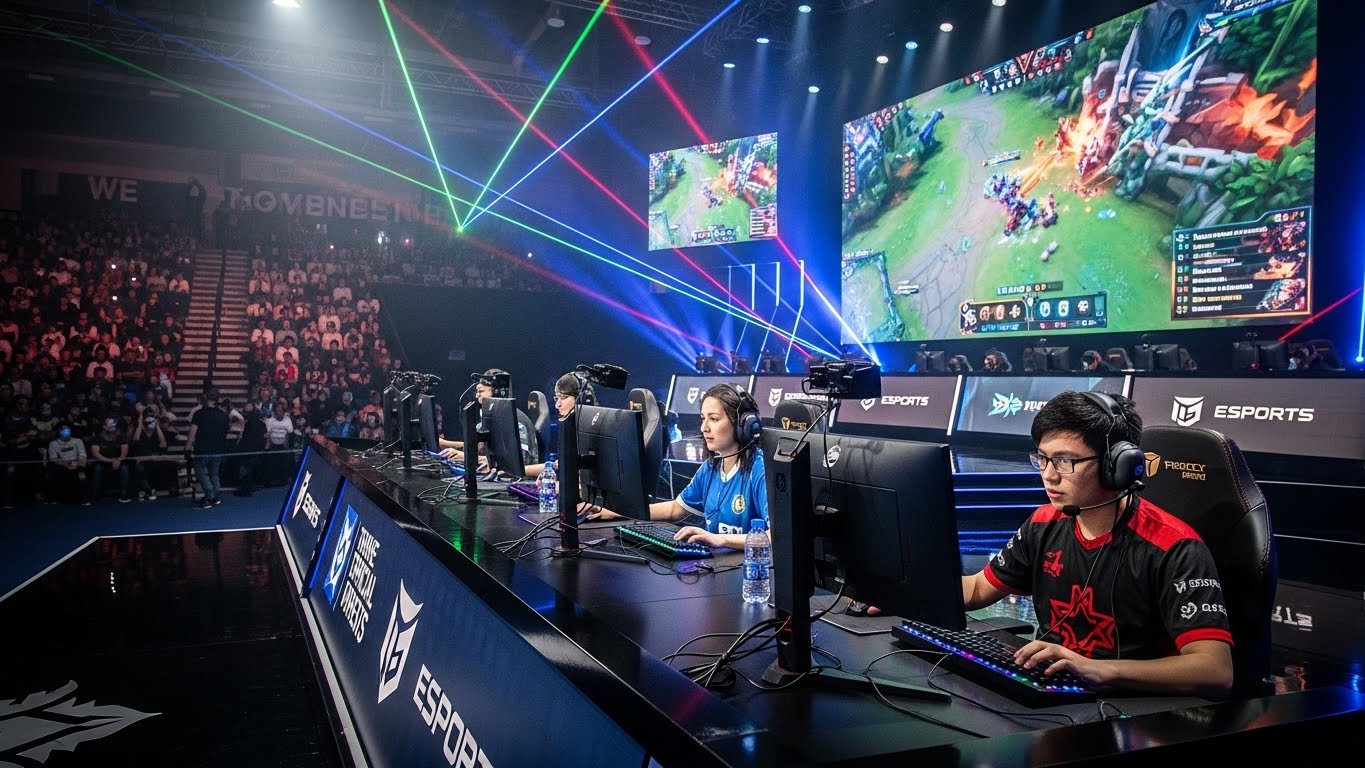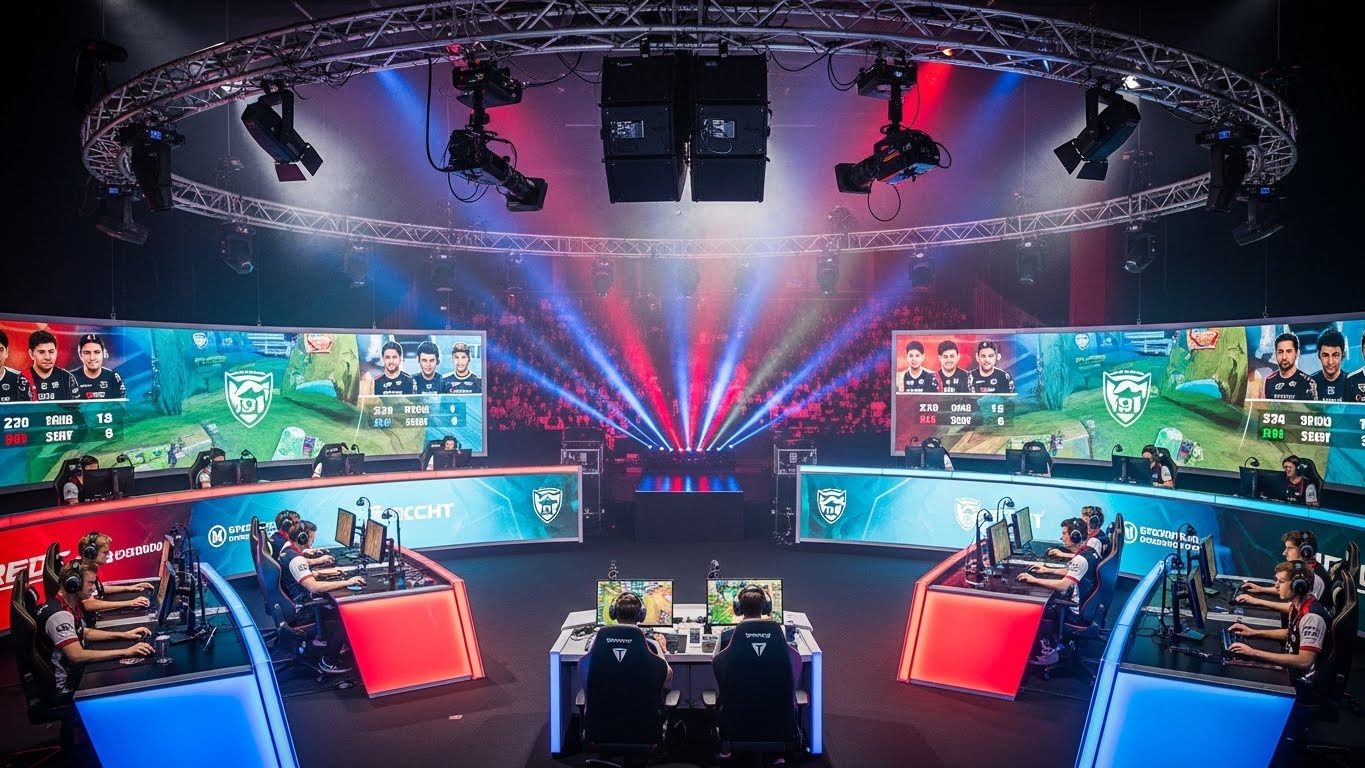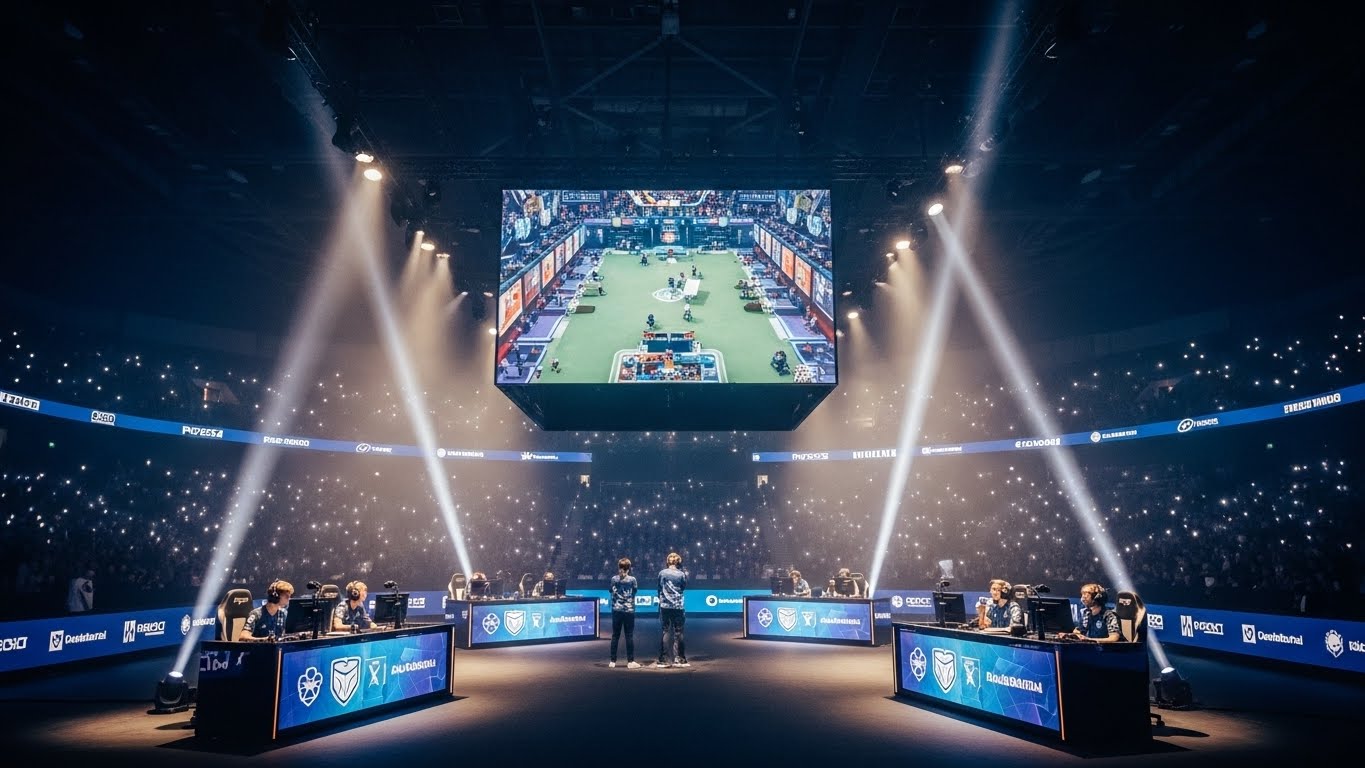
In the past two decades, the rise of esports has transformed the way we think about competition, entertainment, and even sports culture. What was once a niche hobby has exploded into a massive global industry, drawing millions of fans, players, and stakeholders from all corners of the world. Today, esports is not just about playing video games—it’s about building careers, creating international communities, and forging a new type of sports entertainment. With professional leagues, huge prize pools, and an ever-growing online audience, esports is on the verge of becoming as mainstream as traditional sports. This blog explores the evolution of esports, its cultural impact, and what the future holds for this burgeoning industry.
The Birth of Esports: From Casual Games to Global Competitions
The story of esports begins in the early days of video gaming. While video games were initially developed for personal entertainment, players began to compete informally, challenging each other to beat high scores or finish levels faster than others. However, the concept of esports—the organized, competitive playing of video games—did not emerge until the 1990s.
In 1997, the first major esports tournament, the Red Annihilation Tournament, took place. It featured the first-person shooter Quake, and the winner earned a significant prize: a Ferrari. This event marked the beginning of professionalized competitive gaming, although esports was still in its infancy.
The turn of the millennium saw the rise of online multiplayer games, such as StarCraft, Warcraft III, and Counter-Strike. These titles became the cornerstone of early esports competitions, setting the stage for what would become an industry worth billions of dollars. During the 2000s, the esports community began to grow significantly, with competitive events taking place at gaming conventions, on TV, and on various online platforms. The focus of these tournaments was not just on the players, but on their ability to work together as teams and develop strategies to outwit their opponents.
The Growth of Esports: The Rise of Professional Leagues and Teams
As esports grew in popularity, so did its organizational structures. One of the key turning points for esports came in 2011, when Riot Games launched the first League of Legends World Championship. The event garnered over 8 million viewers, a staggering number that showcased the immense potential for esports on a global scale. Riot Games played a pivotal role in shaping modern esports, not only through the game’s success but also by setting the blueprint for professional esports leagues.
By the time Dota 2 came on the scene in 2013, esports had already begun to form its own ecosystem. The International Dota 2 Championship set new records for prize pools, surpassing $10 million in its first year, and this event would continue to set the standard for large-scale esports tournaments.
The success of games like League of Legends, Dota 2, and Counter-Strike: Global Offensive (CS:GO) laid the groundwork for a new wave of professional esports leagues. These leagues were modeled after traditional sports leagues, with franchises representing cities and regions, and seasonal schedules featuring regular matches. The Overwatch League (OWL), launched in 2018, was one of the first to adopt a city-based franchise system, similar to those found in the NFL or NBA. This approach was key to bringing legitimacy and stability to esports teams, creating a pathway for players to pursue gaming as a full-time career.
The Role of Streaming Platforms in Esports’ Explosive Growth
One of the driving forces behind the meteoric rise of esports is the growth of live-streaming platforms, particularly Twitch. Founded in 2011, Twitch quickly became the go-to platform for gamers and esports fans alike, providing a space where individuals could watch live broadcasts of games, tournaments, and casual gameplay. Twitch’s interactive chat features allowed fans to communicate with players, share strategies, and form online communities, which further strengthened the bond between players and fans.
The growth of Twitch made esports more accessible than ever before. Fans no longer needed to attend events in person to experience the thrill of a competition. With a click of a button, they could watch global tournaments in real-time from the comfort of their homes. In 2014, Amazon acquired Twitch for nearly $1 billion, a clear indication that the streaming platform was not only here to stay but would continue to play a major role in the future of esports.
Other platforms, such as YouTube Gaming and Facebook Gaming, also made significant strides in supporting esports content. These platforms helped expand the reach of esports, attracting new fans and enabling professional gamers to build large, loyal followings. The accessibility of these platforms meant that esports could now thrive on a global scale, as fans from every country could tune in to watch their favorite players or teams.
The Business of Esports: Revenue Streams, Sponsorships, and Investments
As esports grew into a global industry, its business potential became apparent. Major corporations, including Coca-Cola, Intel, Mercedes-Benz, and Nike, began to invest heavily in esports, seeking to tap into the vast audience of young, tech-savvy consumers. Sponsorships became a crucial revenue stream for teams, tournaments, and game developers, with companies eager to align their brands with the rapidly expanding esports market.
Esports tournaments, which now regularly feature prize pools in the millions, attract substantial media rights deals, advertising revenue, and merchandise sales. Events like The League of Legends World Championship and The International (Dota 2) have become as much a spectacle as traditional sports tournaments, with stadiums filling up for live broadcasts and millions of viewers tuning in from around the world.
In addition to sponsorships, another critical revenue source for esports is the growing popularity of esports betting. Many platforms allow fans to place wagers on the outcomes of esports matches, much like in traditional sports. As betting laws continue to evolve, the integration of esports into the gambling sector is expected to expand, providing additional financial opportunities.
Esports and Its Cultural Impact: A New Era of Entertainment
Esports is no longer just about the competition itself; it has become a massive cultural force. With the rise of gaming influencers, professional gamers have become celebrities in their own right, with huge followings across social media and streaming platforms. Players like Ninja (Tyler Blevins) and Shroud (Michael Grzesiek) have become household names, attracting mainstream media attention and endorsements from brands outside of the gaming industry.
Esports has also influenced traditional sports, with professional sports teams investing in esports organizations and players. The NBA 2K League, for example, features teams owned by NBA franchises, allowing basketball fans to engage with their favorite sports teams in a virtual space. This cross-pollination between traditional sports and esports reflects how the boundaries between different types of entertainment are blurring in the digital age.
Another cultural impact of esports is its ability to bring people together. Unlike traditional sports, which often have geographic or physical barriers, esports connects people worldwide through the common language of gaming. Fans from different countries and cultures can unite over their love for a particular game, forming global communities that transcend physical boundaries.
The Future of Esports: What’s Next?
The future of esports is as exciting as its past. As the industry continues to grow, several key trends are likely to shape its development:
1. Mainstream Integration
Esports is poised to become a staple in mainstream entertainment. Traditional sports broadcasters, such as ESPN, have already started to broadcast esports tournaments, and it’s likely that more television networks will follow suit. The inclusion of esports in global events like the Asian Games, where esports was featured as a medal sport for the first time in 2018, signals a growing acceptance of gaming as a legitimate form of competition.
2. Technological Innovations
The future of esports will be deeply intertwined with advancements in technology. Virtual reality (VR) and augmented reality (AR) could revolutionize the way games are played and experienced. Imagine an esports match where fans can watch in immersive 360-degree environments or even engage with players in virtual spaces. AI-driven game analysis and player performance tracking will also help players improve their skills and provide new layers of excitement for fans.
3. Youth Engagement and Education
Esports will continue to develop as a viable career path for young people. Universities and schools are increasingly offering scholarships for esports players, and gaming academies are springing up to train the next generation of esports professionals. As the industry grows, esports could become a core part of education, with students learning not only about gaming but also about broadcasting, marketing, and event management.
4. Diversity and Inclusion
The esports industry has the potential to be one of the most inclusive and diverse sports communities in the world. With players and fans from all backgrounds, esports has an opportunity to break down barriers and create a welcoming space for everyone, regardless of gender, race, or nationality. Organizations and events that prioritize inclusivity will play a key role in shaping the future of esports.
Conclusion: The Future of Competition
Esports has come a long way from its humble beginnings in arcades and online forums. Today, it stands as a global entertainment juggernaut, attracting millions of fans and players, and generating billions in revenue. With its massive growth, esports is redefining what it means to be a professional athlete and is set to continue evolving in the years to come.
Whether you’re a casual gamer, an esports enthusiast, or someone who is just beginning to explore this exciting world, it’s clear that esports is not just a passing trend—it’s the future of competition and entertainment. As technology advances and the industry grows, the possibilities for esports are limitless.